


 insights

Introduction
Design transfer is one of the most consequential moments in a medical device startup’s journey. It is the point where engineering intent meets manufacturing reality—and where gaps in documentation, process understanding, or supplier readiness are often exposed for the first time. When design transfer is executed effectively, it creates continuity, predictability, and regulatory confidence. When it is not, it becomes a source of delay, rework, and compliance risk.
As quality leaders responsible for guiding products from development through commercialization, we consistently see startups underestimate the rigor required at the design to manufacturing boundary. The FDA’s Quality Management System Regulation (QMSR), effective February 2, 2026, reinforces this reality. Design transfer is no longer a brief handoff activity; it is a documented, verified process aligned with ISO 13485:2016 requirements. Understanding this shift early is essential to maintaining momentum and avoiding preventable setbacks to manufacturing timelines.
Key Takeaways:
- QMSR Is Effective: As of February 2, 2026, the FDA’s Quality Management System Regulation (QMSR) incorporates ISO 13485:2016 by reference, harmonizing U.S. requirements with global standards. Also see the FDA QMSR FAQs.
- Design Transfer Is Explicitly Defined: The former requirement under 21 CFR 820.30(h) is replaced by ISO 13485 Clause 7.3.7 (Design and Development Transfer).
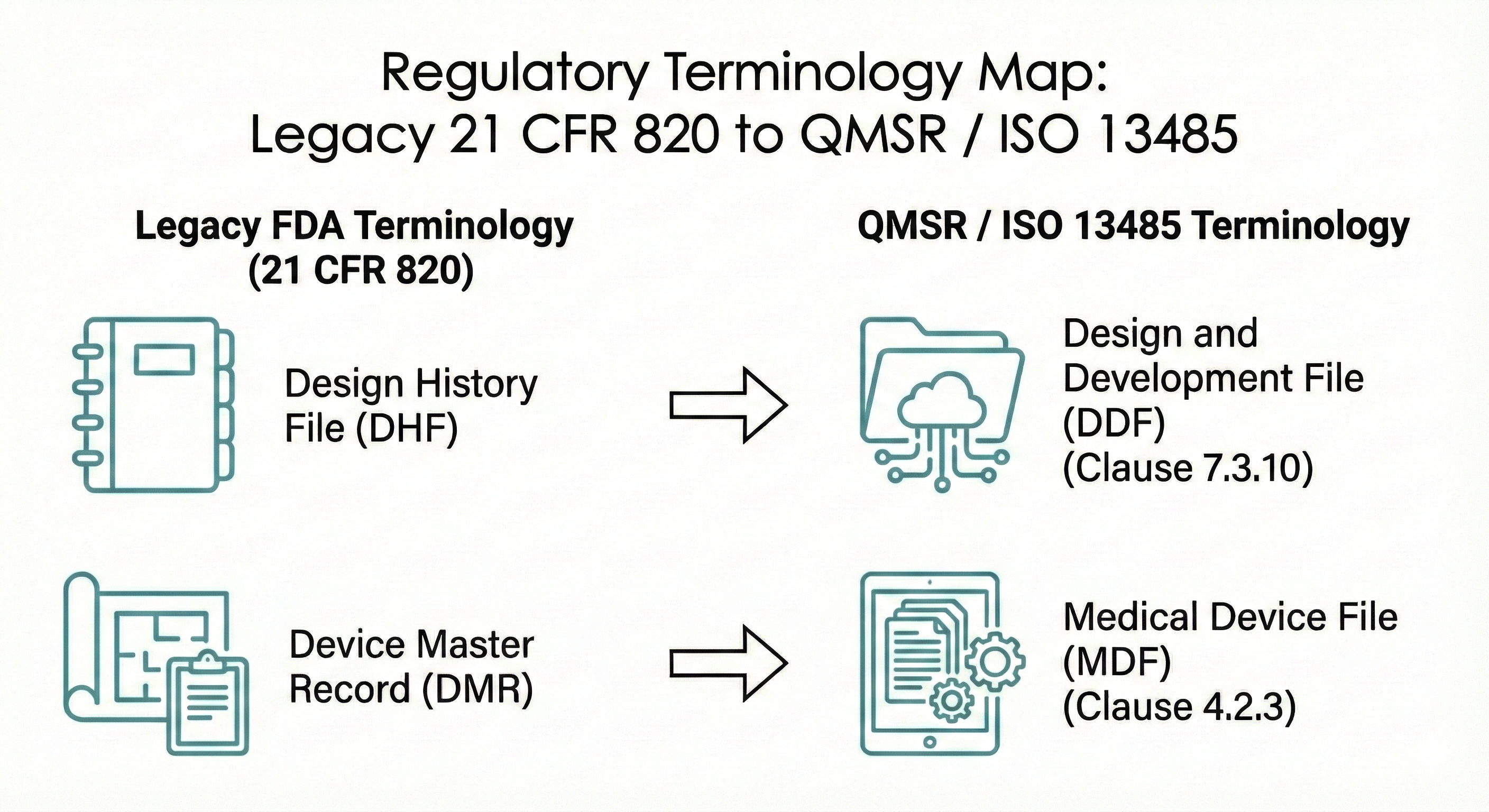
- Terminology Has Evolved: Legacy FDA terms such as Design History File (DHF) and Device Master Record (DMR) are now aligned with ISO terminology: Design and Development File (DDF) and Medical Device File (MDF).
- Integration Reduces Risk: Treating design and manufacturing as a continuous, connected process significantly reduces transfer-related compliance and execution risk.
 The New Standard: Moving from 21 CFR 820 to ISO 13485
Under QMSR, the FDA has aligned 21 CFR Part 820 with ISO 13485:2016 through incorporation by reference, with a limited number of FDA-specific expectations and clarifications. While the principles of design control remain familiar, the expectations around design transfer are more explicit and structured. Manufacturers must demonstrate that design outputs are not only complete but verified as suitable for manufacturing before they become final production specifications.
Understanding ISO 13485 Clause 7.3.7
ISO 13485 Clause 7.3.7 defines Design and Development Transfer. It requires manufacturers to:
• Establish documented procedures for transferring design outputs to manufacturing
• Verify that design outputs are suitable for manufacturing
• Ensure that production specifications accurately reflect approved design outputs
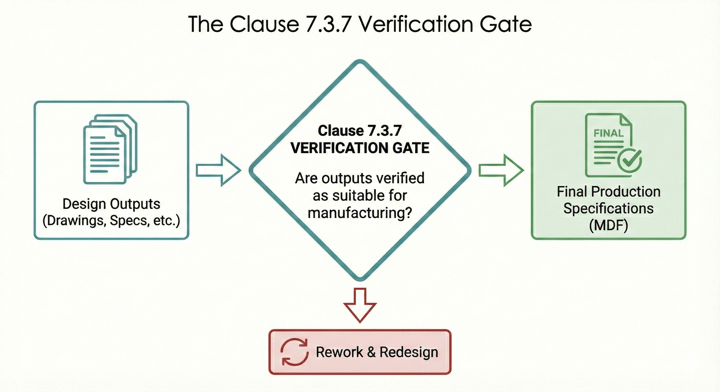
Under QMSR, design transfer is considered incomplete unless suitability for manufacturing has been verified and documented. Informal handoffs or assumptions of manufacturability no longer meet regulatory expectations.
Why Design Transfer Breaks Down for Startups
Even when device designs are technically sound, design transfer frequently fails due to process and organizational gaps rather than engineering deficiencies. For early stage and scaling startups, several recurring challenges emerge.
Loss of Design Intent
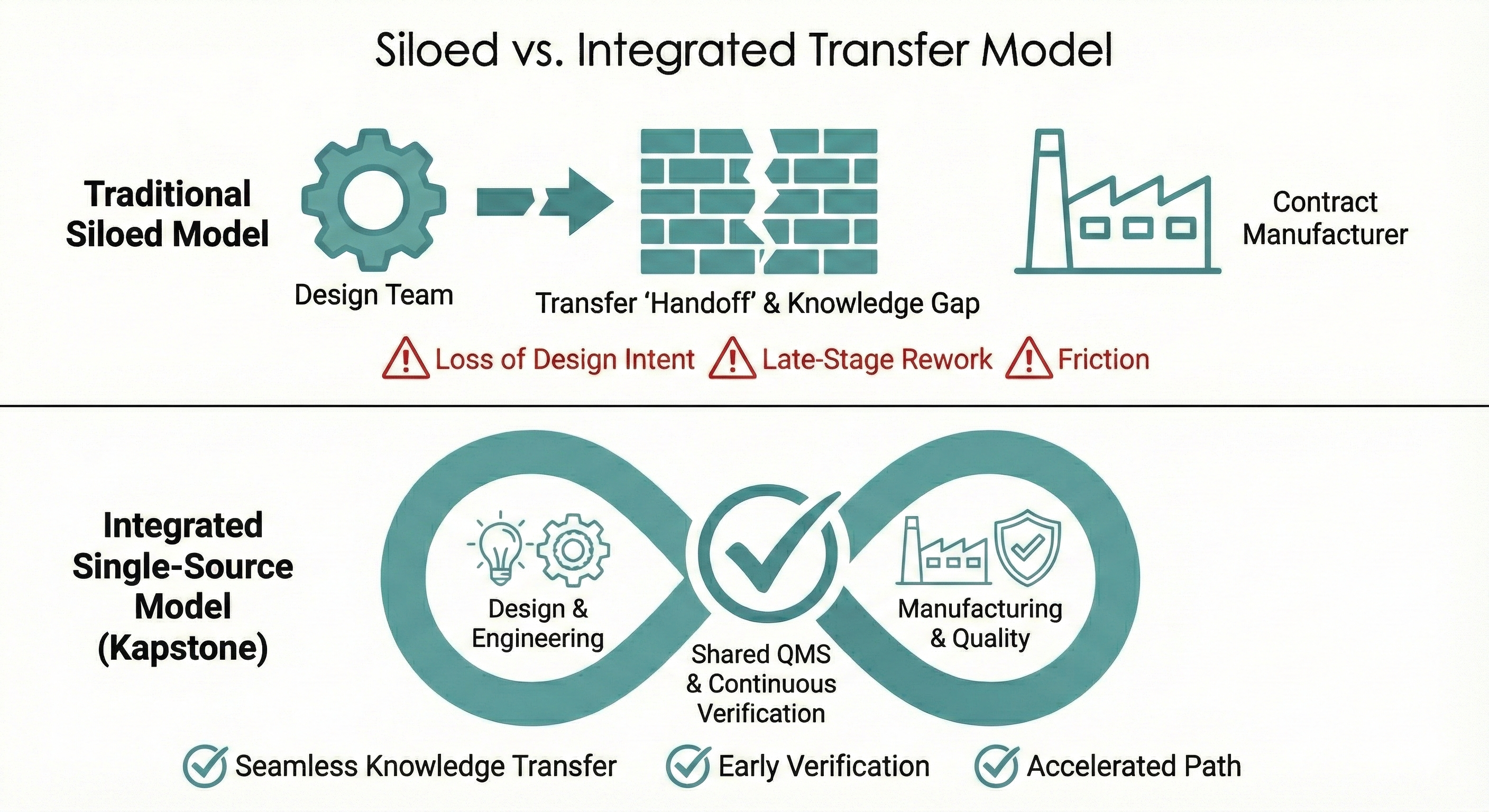
Design decisions made during development are often distributed across multiple systems, informal files, or individual contributors. When manufacturing teams or contract manufacturers receive incomplete context, critical design intent can be lost, leading to misinterpretation, inconsistent builds, or unintended design changes.
Late-Stage Rework
Without early verification that design outputs are suitable for manufacturing, producibility issues are often discovered only after transfer activities begin. Addressing these issues late in the cycle can trigger additional design changes, verification, validation, and documentation work under QMSR.
Contract Manufacturer Friction
When design and manufacturing are handled by separate organizations, responsibilities during transfer can become unclear. Contract manufacturers may request changes to accommodate equipment, processes, or suppliers, while development teams assume the design is already finalized. Without documented verification of manufacturing suitability, this disconnect creates both execution delays and compliance risk under ISO 13485 Clause 7.3.7.
Fragmented Quality Systems
Maintaining separate quality systems for design and production complicates traceability and audit readiness. Mapping design records to manufacturing specifications becomes more difficult, particularly when legacy FDA terminology (DHF/DMR) is not clearly aligned with ISO terminology (DDF/MDF) within the Quality Management System.
New Regulatory Terminology Under QMSR
From Design History File (DHF) to Design and Development File (DDF)
While QMSR no longer mandates the term “Design History File,” the requirement to document the design and development process remains.
-
ISO Term: Design and Development File (DDF)
-
Clause: ISO 13485:2016 Clause 7.3.10
-
Purpose: Contains or references all records necessary to demonstrate that the design was developed in accordance with the approved plan and regulatory requirements.
From Device Master Record (DMR) to Medical Device File (MDF)
The Device Master Record concept is expanded under ISO 13485.
-
ISO Term: Medical Device File (MDF)
-
Clause: ISO 13485:2016 Clause 4.2.3
-
Purpose: Encompasses specifications, procedures, and quality requirements needed to manufacture the device, including drawings, bills of materials, labeling, and packaging.
Organizations may continue using legacy acronyms internally, but the Quality Manual should clearly map these terms to the appropriate ISO clauses.
The Design Transfer Checklist
Successful design transfer begins early in development and is reinforced through structured checkpoints. A comprehensive design transfer checklist should confirm:
-
Design Outputs are Verified and Manufacturable: Production specifications were released before verification of manufacturability
-
Risks are Updated and Controlled: Risk management is no longer “design-only”-it must follow the device into production.
-
Manufacturing is Defined and Proven: Manufacturing should not need to “interpret” the design.
-
Supply Chain Readiness: Qualified suppliers and established lead times
-
Process Validation: Completion of IQ/OQ/PQ for manufacturing processes
-
Test Method Validation: Inspection methods capable of detecting defects
-
Labeling Compliance: Alignment with UDI and GUDID requirements
Integrating these checks early in the New Product Development roadmap helps prevent downstream delays and helps demonstrate that formal ownership has shifted from Design to Production.
The Single Source Advantage Source Advantage
Traditional models often separate design and manufacturing across different vendors, increasing the risk of knowledge loss and misalignment. When design and manufacturing operate within a shared Quality Management System, information transfer is more accurate, accountability is clearer, and regulatory expectations are easier to meet.
At Kapstone Medical and Kapstone Manufacturing, design and manufacturing teams operate as a single, integrated system, supporting continuity from development through commercialization and reducing design transfer risk.
Conclusion
Under the FDA’s Quality Management System Regulation, design transfer is no longer a passive milestone—it is an active, verifiable process grounded in ISO 13485:2016 requirements. By understanding the new expectations, addressing common startup pain points, and aligning design and manufacturing early, companies can reduce risk, maintain compliance, and move confidently toward commercialization.
Frequently Asked Questions
What is 21 CFR 820.30(i)?
21 CFR 820.30(i) is the legacy FDA requirement for Design Transfer, ensuring that device designs are correctly translated into production specifications. Under QMSR, this requirement is preserved and strengthened through ISO 13485:2016 Clause 7.3.8, with greater emphasis on objective proof of manufacturing readiness.
What is ISO 13485:2016?
ISO 13485:2016 is the international standard for medical device quality management systems.
What is ISO 13485 Clause 7.3.8?
Clause 7.3.8 addresses design and development transfer, requiring verification that design outputs are suitable for manufacturing before they are released as final production specifications.
What is a Design History File (DHF)?
A Design History File (DHF) is documented evidence that a medical device was developed under a compliant design control process. Under QMSR, this requirement continues through the ISO 13485 Design and Development File, even though the terminology has changed.
What is a Device Master Record (DMR)?
A Device Master Record (DMR) is a legacy FDA Quality System Regulation (QSR) requirement that contains—or references—the complete set of specifications and procedures needed to manufacture a medical device in accordance with the approved design. Under QMSR, the term Device Master Record is no longer explicitly used. Instead, FDA enforces the ISO 13485–based framework, primarily through: ISO 13485:2016 Clause 4.2.3 — Medical Device File (MDF)
What is a Device History Record (DHR)?
A Device History Record (DHR) is the documented proof that each device or lot was manufactured, inspected, and released in compliance with the approved specifications. Under QMSR, the term DHR is no longer explicitly used. While the terminology is changing under QMSR, the expectation for complete, traceable production records remains unchanged.
When should startups begin design transfer planning?
During early design phases to identify producibility issues and ensure complete documentation.
How long does design transfer typically take?
3–18+ months depending on device complexity. Integrated partners can reduce this by 30–40%.
What causes most design transfer failures?
Manufacturing readiness was assumed instead of proven, lack of cross-functional ownership, changes during transfer were poorly controlled and or documented, lack of manufacturing input, and inadequate process validation.
Does QMSR apply to all medical device manufacturers?
Yes, QMSR applies to all medical device manufacturers including contract manufacturers.


